A guide to pet friendly journeys starts with one simple principle: do not leave your pet’s transport to chance. Whether you are travelling from Crawley to Gatwick Airport, taking your dog to the vet in Horley, or collecting a new pet from further afield, a little planning makes the journey safer and considerably less stressful for everyone.
Pets do not understand delayed trains, busy terminal roads or a last-minute change of vehicle. They do respond to familiar routines, calm handling and enough space to travel securely. Booking a suitable pet-friendly taxi in advance gives you certainty over the vehicle, collection time and fare, without having to negotiate at the kerbside with an anxious animal beside you.
Plan the Journey Around Your Pet
The right travel plan depends on your pet’s size, temperament and the length of the journey. A relaxed dog used to car travel may be happy with a secure harness and a protective seat cover. A cat, rabbit or smaller pet will usually feel safer in a properly ventilated carrier that cannot slide or tip during braking.
Think about the route before you book. A short local journey from RH10 or RH11 may only require a straightforward collection and drop-off. A longer airport transfer to Heathrow, Luton, Stansted or London City needs more preparation, including comfort stops where appropriate, water, documentation and additional time for traffic.
For Gatwick journeys, allow time for terminal access as well as the drive itself. South and North Terminal have different approach roads and drop-off arrangements, and airport traffic can be unpredictable during peak holiday periods. A pre-booked private hire journey gives your driver the information needed to choose a sensible route and plan the collection properly.
What to Tell a Pet-Friendly Taxi When Booking
Pet-friendly does not mean that every vehicle is suitable for every animal. A carrier for one cat requires very different space from two large dogs and several cases for an airport trip. Clear details at the booking stage help the operator allocate the right vehicle and avoid delays on the day.
Provide the number and type of pets, their approximate size, whether they will be in carriers, and any relevant behaviour such as nervousness around strangers or other animals. Also mention luggage, pushchairs, wheelchairs or mobility equipment. This is particularly helpful for families travelling to Gatwick, where suitcases can quickly reduce available space.
Ask whether your pet should travel in a carrier, on a harness or in the rear footwell or boot area of an appropriate vehicle. Never assume a pet can travel loose. The safest arrangement will vary, but the driver should always be able to concentrate fully on the road without distraction.
If you need a return journey, arrange it at the same time. For airport travel, provide your flight number and expected arrival time. Live flight monitoring can help a pre-booked airport transfer respond to a delay, but it is still wise to keep your phone switched on after landing in case the driver needs to confirm the meeting point.
Prepare Your Pet Before Collection
The best way to make car travel easier is to make it familiar. Take dogs on a short walk before collection so they can settle during the journey. Give cats and smaller animals time to enter their carrier calmly rather than trying to rush them in as the taxi arrives.
Avoid a large meal immediately before travel, especially if your pet is prone to motion sickness. For longer journeys, bring water, a small bowl, waste bags, wipes and any medication your pet may need. A favourite blanket can make a carrier feel more secure, but it should not obstruct ventilation.
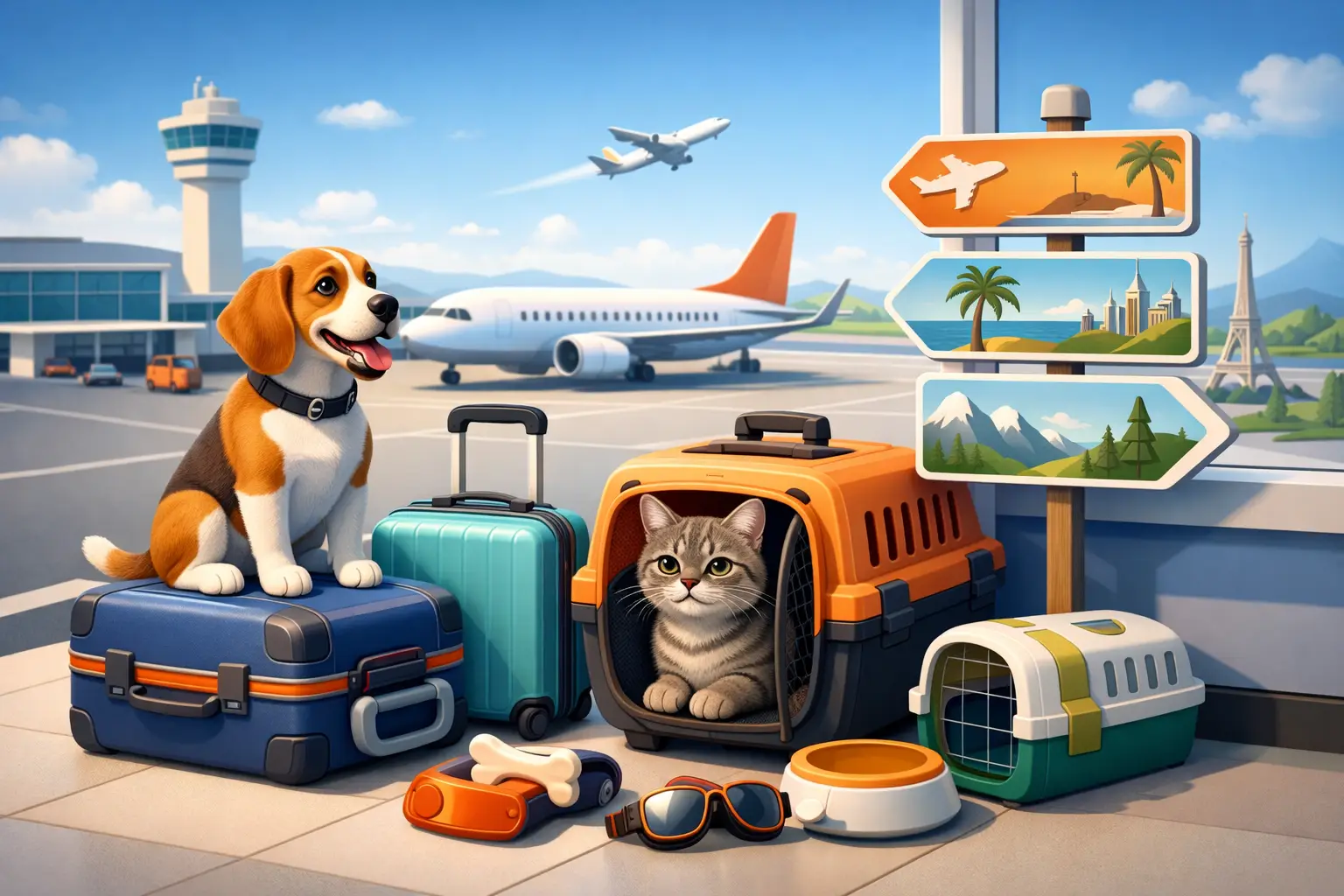
A practical pet travel kit should include: