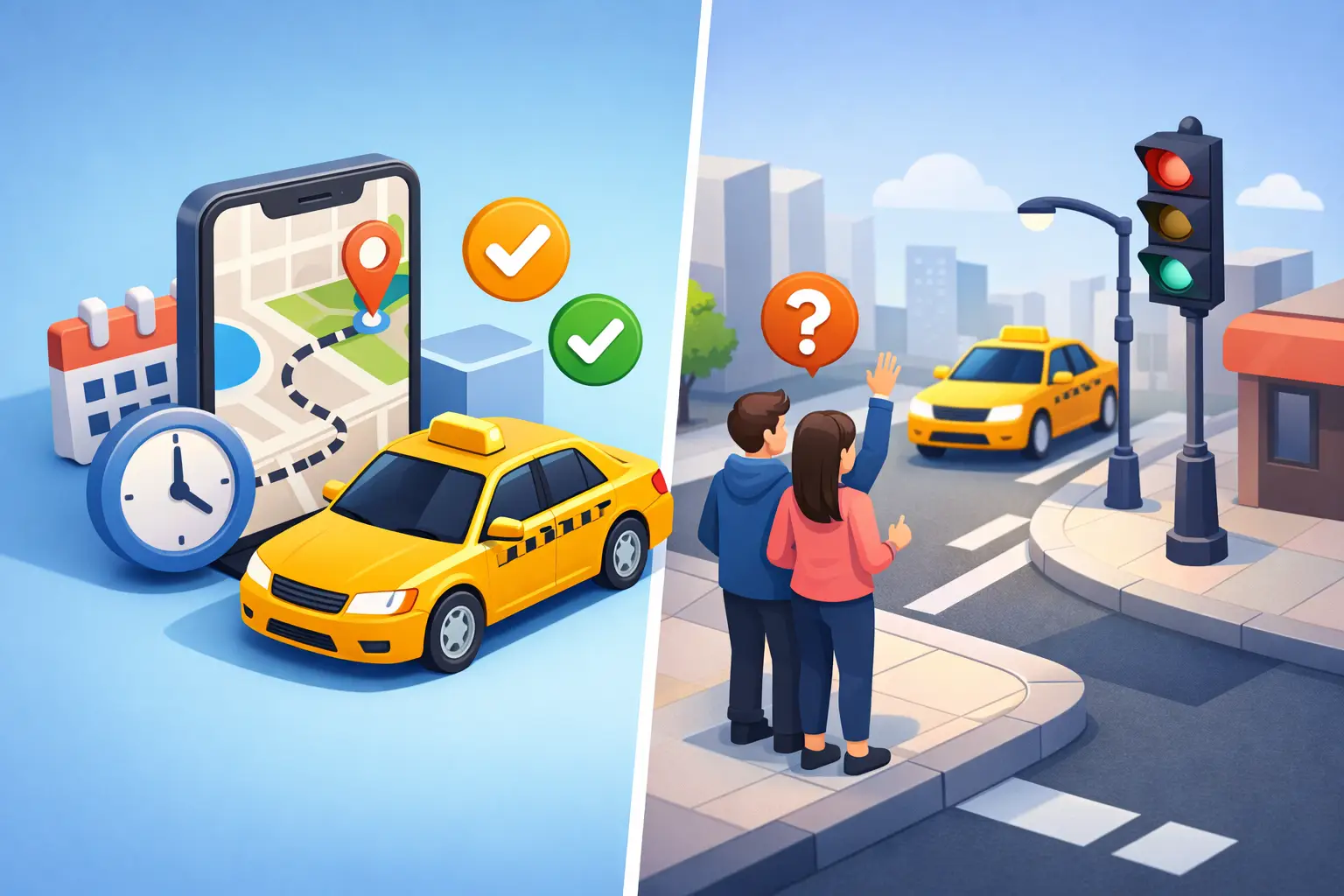

A taxi that turns up late at 4am for a Gatwick drop-off is not a small inconvenience. It can mean stress at check-in, extra parking costs, or the real risk of missing a flight. That is why so many passengers ask the same question: are pre booked taxis more reliable than hailing one on the day or trying a last-minute app booking.
In most cases, yes. A pre-booked taxi is usually the more reliable option because the journey is planned in advance, the driver is allocated earlier, and the operator has time to manage traffic, flight times, pickup details, and special requirements. But reliability is not just about booking early. It also depends on who you book with, what type of journey you need, and how well the company manages real-world delays.
Are pre booked taxis more reliable for airport journeys?
For airport transfers, pre-booking is generally the safer choice. Airport travel is less forgiving than an ordinary local trip because the timing matters more. If you are travelling from Crawley, Horley, Copthorne or Charlwood to Gatwick or further afield to Heathrow, Luton or Stansted, you are working to a schedule that cannot easily be moved.
A pre-booked service gives the operator the chance to build your trip into its schedule rather than hoping a driver happens to be free when you need one. That matters even more during busy periods such as school holidays, early mornings, rail disruption, poor weather, or major events.
For arrivals, pre-booking adds another layer of dependability. A good airport transfer company will track the flight, adjust for delays, and send a driver at the right time. If you land late, the booking should move with you. That is far more reassuring than landing at Gatwick and then joining a queue, checking app prices, or finding that vehicle availability has dropped.
Why pre-booking usually improves reliability
The biggest advantage is planning. When a booking is made in advance, the operator can assign the right vehicle, allow proper travel time, and prepare for known factors such as roadworks, terminal pickups, or peak traffic around the airport corridor.
It also reduces the randomness that comes with on-demand travel. If you book at the last minute, you are relying on whatever drivers are free nearby at that exact moment. Sometimes that works perfectly. Sometimes it does not. A shortage of vehicles, a surge in demand, or a longer-than-expected previous job can quickly affect pickup times.
With pre-booked travel, there is usually more clarity around the basics that matter. You know who is collecting you, when they are expected, what kind of vehicle has been arranged, and what the fare should be if the company offers fixed pricing. For many passengers, that certainty is a key part of reliability.
Reliability depends on the operator, not just the booking method
Pre-booking is not a magic fix if the company itself is poorly run. A badly managed operator can still overbook, send the wrong vehicle, fail to communicate, or leave too little buffer time. So the better question is not only are pre booked taxis more reliable, but what makes a pre-booked taxi reliable in practice.
The first sign is proper scheduling. A dependable operator does not stack jobs so tightly that one small delay ruins the next three pickups. The second is local knowledge. Drivers who know Crawley town centre, the RH10 and RH11 areas, local schools, business parks, and the usual pressure points on routes to Gatwick can make better timing decisions than someone simply following a sat nav.
The third is clear communication. If a flight is delayed, if the pickup point changes, or if traffic becomes heavier than expected, passengers need updates rather than silence. Reliability is not only about arriving on time. It is also about knowing what is happening.
When pre-booked taxis are clearly the better option
Some journeys are suited to advance booking far more than others. Airport transfers are the obvious example, but they are not the only one.
School runs benefit from routine and consistency. Families want to know the driver is expected and the timing is established. Corporate travel is similar. If you are heading to a meeting, a train, or an event, uncertainty is rarely acceptable.
Pre-booking also matters more when the journey has extra requirements. That might mean a larger car for luggage, a wheelchair-accessible vehicle, a pet-friendly taxi, or meet-and-greet support for an arriving passenger. Those are not details you want to negotiate at the kerbside.
Even for ordinary local travel, pre-booking can be worthwhile at busy times. Friday evenings, weekend nights, bank holidays, and school holiday weekends often put pressure on vehicle availability. Booking ahead reduces the chance of long waits or inflated app pricing.