Missing one small detail can turn an airport journey into a stressful one. With wheelchair airport assistance, the difference usually comes down to timing, clear handover points and knowing who is responsible for each part of the trip. If you are flying from Gatwick, or arranging travel for a relative, it helps to understand how airport support works before the day of departure.
For many passengers, the worry is not the flight itself. It is getting from the front door to check-in, through security, to the gate, and then doing it all again on the return journey. Airport assistance can make that process much easier, but only if it is booked properly and matched with suitable ground transport.
What wheelchair airport assistance actually covers
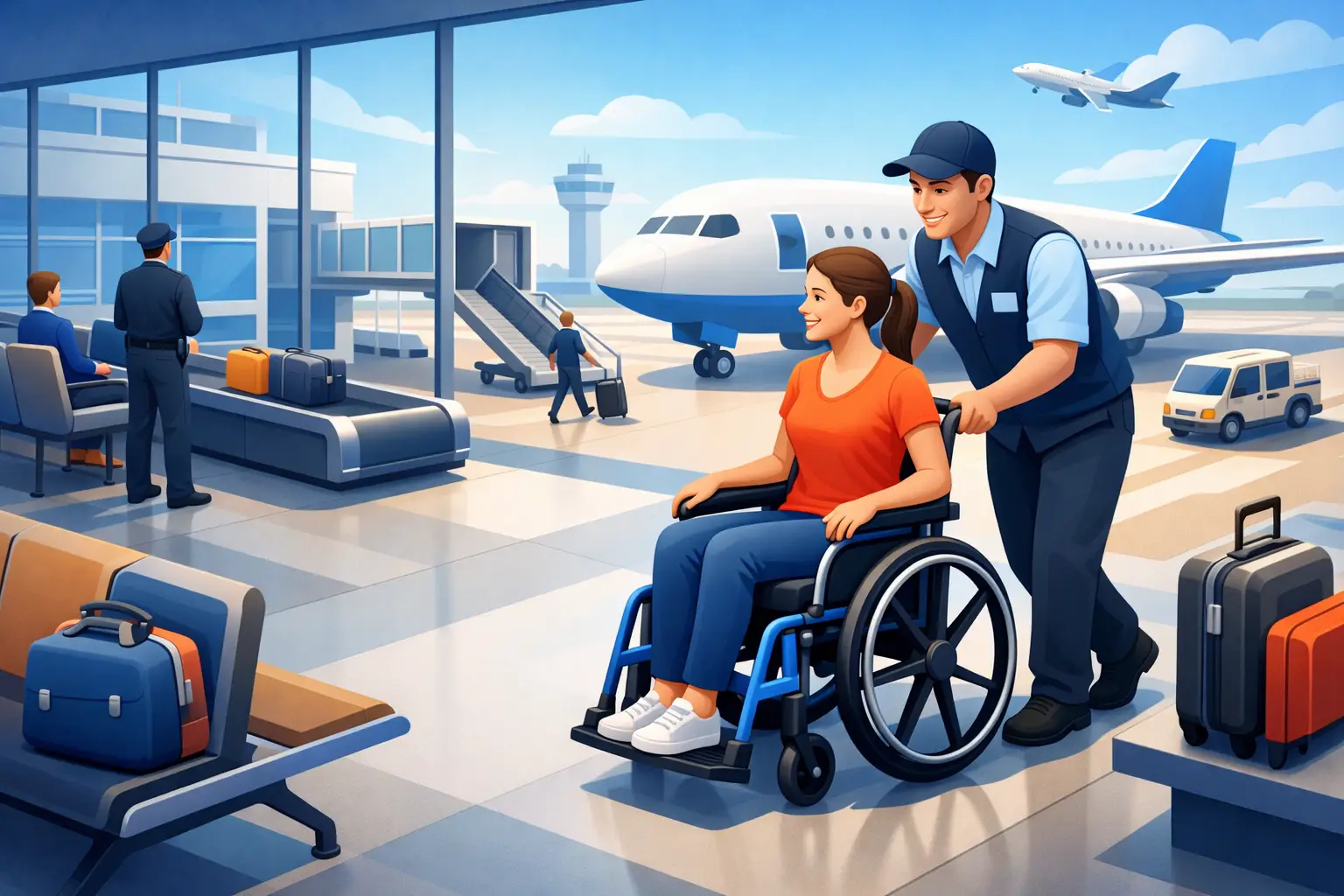
Wheelchair airport assistance is a support service for passengers who have reduced mobility or need help moving through the airport. That might mean a manual wheelchair pushed by airport staff, an electric buggy in some areas, or personal support from the terminal entrance through to boarding.
The service is usually arranged through the airline, tour operator or airport booking channel. In practice, the exact handover points can vary. Some passengers are collected from a designated assistance desk inside the terminal. Others may be met at a special assistance point outside. That is why the journey to the airport matters just as much as the airport booking itself.
Not every passenger needs the same level of support. Some can walk short distances but need help with long terminal routes. Others travel with their own wheelchair and need assistance only with boarding and disembarking. Some need help from arrival through to baggage reclaim and onward collection. Getting the right level of assistance starts with being specific when you book.
How to book wheelchair airport assistance properly
The safest approach is to arrange assistance as early as possible, ideally when the flight is booked. Leaving it until the last minute can still work, but it gives staff less time to prepare and increases the chance of delays or confusion.
When booking, be clear about whether the passenger can walk at all, whether they can manage steps, and whether they are travelling with their own wheelchair. If they use a powered chair, dimensions and battery type may also be required. These details affect how the airline and airport plan the service.
It also helps to think beyond the terminal. A passenger may have wheelchair airport assistance booked for the flight, but if they arrive at Gatwick in a standard car that is not easy to get in and out of, the journey becomes harder than it needs to be. The same applies on the way home, especially after a long flight when energy levels are lower.
Wheelchair airport assistance at Gatwick
Gatwick is a busy airport with two terminals, changing traffic flows and strict forecourt arrangements. For passengers using wheelchair airport assistance, that means a little planning goes a long way. The key question is where the passenger will be dropped off, how long it will take to reach the assistance point, and whether the airport staff will take over from that moment or from inside the terminal.
This is where local knowledge matters. A driver who knows the Gatwick approach roads, terminal layouts and collection procedures can help reduce unnecessary walking, waiting and uncertainty. For families and carers, that reassurance matters. You do not want to be figuring out the best entrance or the right bay while also managing luggage, travel documents and mobility needs.
There is also the return journey to consider. On arrival, assistance may take the passenger through passport control and baggage reclaim, but there can still be a wait before they are brought to the agreed collection point. A pre-booked airport transfer with flight monitoring helps because timings can shift, especially if the aircraft lands late or assistance demand is high.
Why airport help and taxi help are not the same thing
One of the most common misunderstandings is assuming airport assistance covers the full journey from home to aircraft. It does not. Airport staff handle the airport side. The transport to and from the airport is separate.
That matters because many accessibility problems happen before the terminal doors. A passenger may need a vehicle with enough space for a folded wheelchair, easier access for sitting and standing, or a driver who can assist with luggage and take time at pickup. If the passenger is travelling with family, there may also be suitcases, hand luggage, pushchairs or medical items to fit in safely.
For some people, a standard saloon is fine. For others, it is not. It depends on mobility, the type of wheelchair, how far the passenger can walk, and whether they are travelling alone. A practical plan looks at the whole chain, not just one part of it.
Planning the full journey from home to terminal
The smoothest airport trips are the ones broken into simple steps. First, confirm the flight booking and special assistance request. Then confirm the pickup time with enough margin for traffic, check-in and terminal handover. After that, make sure the vehicle is suitable for the passenger and their equipment.